Skip to main content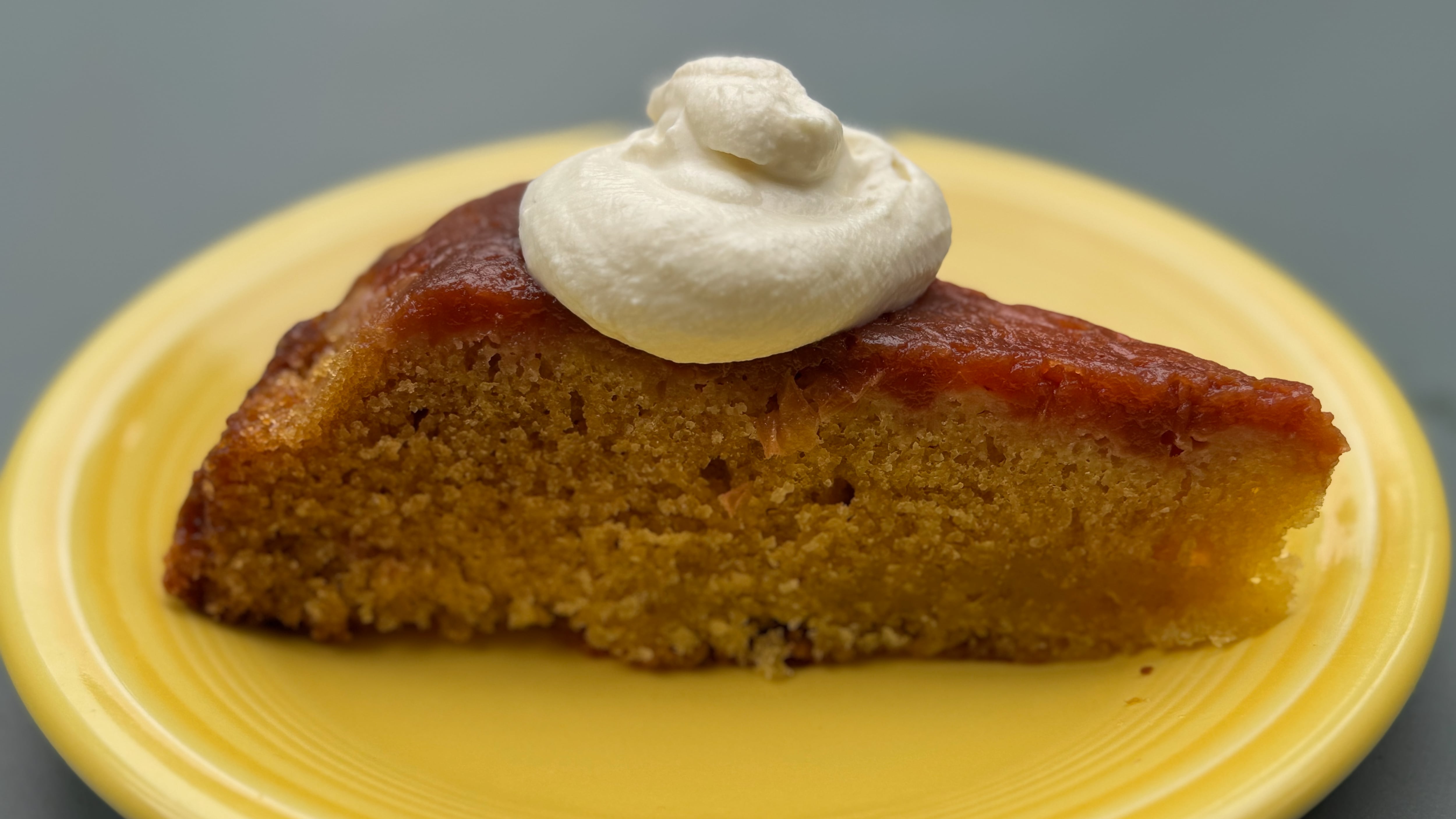
Wellspent Market founder Jim Dixon has been writing about food and restaurants for Willamette Week for a long time. He wants our readers to eat well, and he shows them how with the recipes he creates just for us by using simple cooking techniques and easy-to-find ingredients.
I’m not sure why I started adding semolina flour to my olive oil cake. But once I’d added the coarse flour usually used to make pasta, I never stopped. It gives the cake a moist, slightly custardlike texture that emphasizes the already moist crumb that using olive oil instead of butter brings about.
Lazy baker that I am, I let my food processor do all the work. The dry stuff goes in first and gets a quick blitz, then the oil and another slightly longer blitz. The eggs and liquid get the same treatment, then I just pour the batter into a skillet and pop it in the oven.
Quince can be hard to find (you can buy some at Quince Fest in October), but I have a quince tree in the backyard and usually have cooked quince in the freezer that I need to use. You can swap for plums, rhubarb or assorted berries, but you can skip the fruit altogether.
Recipe
For the quince
- 2 quince
- 2 cups water
- ½ cup sugar
For the cake
- 1 cup all-purpose flour
- 1 cup semolina flour
- 1¼ cups sugar
- 2 teaspoons baking powder
- ½ teaspoon baking soda
- ½ teaspoon kosher-style sea salt
- 1 cup olive oil
- 2 eggs
- 1 cup buttermilk
The quince will take at least a couple of hours, so make it first or even a day or more ahead. Cut the unpeeled fruit into quarters and arrange in a pan large enough to hold the quarters in a single layer. Add the water and sugar, bring to a gentle boil, reduce to a simmer, cover, and cook until the fruit turns a rosy pink color. Let cool, remove the fruit, and use a small knife to cut out the seed cores. Put it back into the cooking liquid and use a fork to mash coarsely so it resembles chunky applesauce.
Add the all-purpose and semolina flours, sugar, baking powder, baking soda and salt into your food processor and pulse a few times to mix. (Alternatively, you can do the same process in a large bowl with a whisk.) Add the oil and process until completely mixed. Add the eggs and process for another few seconds. Add the buttermilk and process again.
Cut a piece of parchment paper to fit the bottom of a 9-inch skillet. Add a tablespoon or so of olive oil, then place the parchment on top and move it around to grease the pan. Spread the quince on the parchment in an even layer, then pour the batter on top of the fruit layer. (If you’re skipping the fruit, you can just oil and flour the pan, then serve the cake from the skillet and skip the inverting step below.)
Bake at 350°F for 55 minutes or until the top is nicely browned and a toothpick inserted into the center comes out clean. Let the cake cool for at least a couple of hours, then run a butter knife around the edges of the skillet. Hold a flat cake dish firmly on top of the skillet and confidently flip it over and set the plate down. Make sure the skillet is centered on the plate, then lift it off. Gently peel off the parchment.
Serve with a generous dollop of whipped cream.