Skip to main content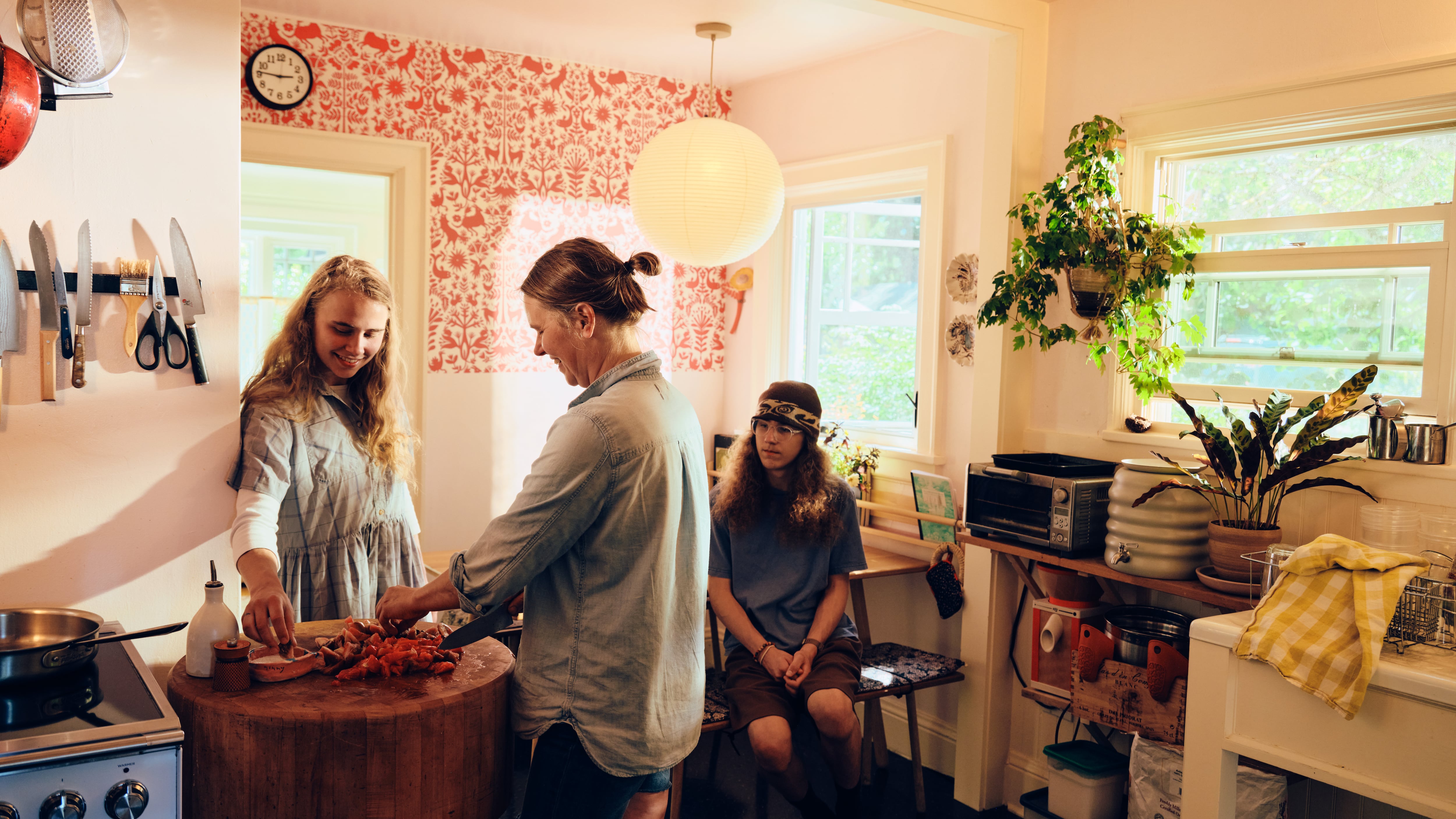
For Sarah Minnick, everything—from making a home to building a successful business—is a family affair.
Minnick bought her house in 2001, jointly with her sister, Jane. At the time, housing costs in Portland—especially North Portland—were low, and houses were rarely staged.
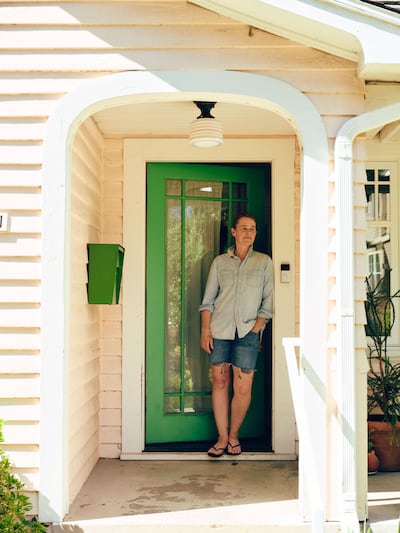
“You just looked at a house, and there was, like, pee in the toilet, and it was empty and disgusting,” Minnick says. “But this one was just really cute, and was ready to just be a home,” with little additional work needed to make it livable. Her sister eventually moved out, though she still lives just a mile away. For several years, the two lived either together or in adjacent homes, with their kids playing together in a shared garden in what then felt like a very rural street. Minnick at the time worked for Adidas but had a long history in restaurants, and in 2004 opened Lovely Hula Hands with Jane. Its successor, Lovely’s Fifty Fifty, is still a family affair, and has retained its commitment to using ingredients found, foraged or locally grown.
“Our kids are older now—the youngest ones are like 15, 16—but they had this whole garden to play in, they had each other’s yards,” Minnick says. (“Butt naked,” adds Minnick’s daughter, Sophie, now 21. She and her 15-year-old brother Otto both live at home.) “We would just set up pools in the summer, and it was just like such a great place to grow up. It was very intergenerational, before I ever even heard that word.”
Intergenerational living is a concept that has since spawned countless articles in lifestyle magazines, but at the time, the Minnick sisters were just doing what made sense to them.

Minnick’s house was adjacent to an open field neighbors were informally farming. The family bought a house on the other side of the garden, where Jane lived for a while before moving to a larger house a mile away; now that house is occupied by Minnick’s mother, Ann Reed.
To visit Reed, Minnick takes a short walk through several gardens. First is her own backyard—a space occupied partly by an accessory dwelling unit Minnick rents out, but also by a small garden where Minnick grows edible flowers for use on pizza at Lovely’s. Then she strolls through the Beech Community Garden—the city has since developed the open lot Minnick’s children used to play in—and from there she can wander into Reed’s backyard.
Whereas Minnick’s garden is small and contained in raised beds, Reed’s is large and sprawling, with berry bushes, fruit trees and herbs. Reed is also a fan of Japanese gardens, and there are nods to that as well, notably in the pruning of Reed’s favorite tree, a mugo pine.
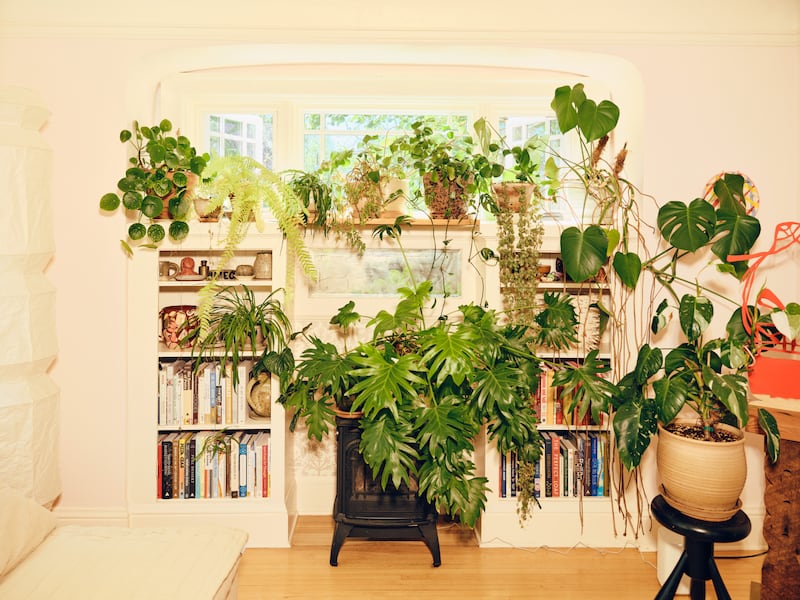
Minnick’s house is somewhat sparsely—though colorfully—decorated, with small blocks of wallpaper and a few large pieces of art and carefully collected handmade ceramics (they are part of the reason Minnick refuses to own a dishwasher). The e-cargo bike Minnick takes to the farmers market occupies much of the living room, but looks almost like a piece of art. A knickknack shelf is lined with small pieces either made by Minnick’s children or collected on her travels; the living room is anchored with a portrait of Minnick’s mother made by a college roommate. The same Old World-style wallpaper adorns the walls of both the living room and the kitchen; Minnick notes it’s adhesive wallpaper from Hygge & West. Apart from Minnick’s sprawling plant collection, Minnick’s home feels spare but homey.
Reed takes a different approach. After taking a moment to feed Scout, a brown tabby who “goes feral in the summertime” but comes indoors in the winter, Reed walks us through her home, a smaller house built the same year as Minnick’s.
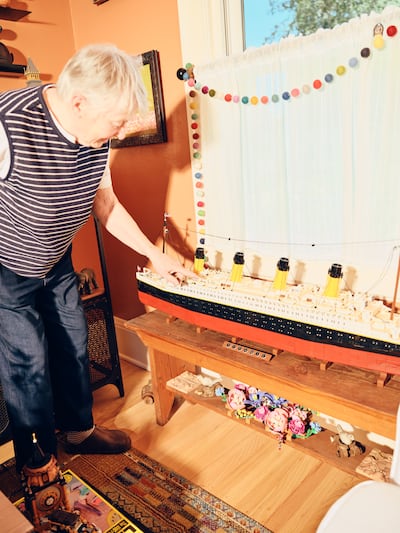
Reed, 80, a retired corporate accountant, started purchasing Lego sets when her grandchildren were little. Now assembling Lego sets competes with gardening as her main retirement hobby. Her office doubles as “the Lego room,” but really, assembled Lego sets are visible in every room on the tour. A Lego set of the Titanic acts as the centerpiece of her living room; she’s also put together Lego sets of landmarks like Taj Mahal and Big Ben. Behind them are family photos and pieces of art collected on trips.
“I’m design low. She’s very maximalist,” Minnick says.
Reed still does the books for Lovely’s Fifty Fifty, but “that doesn’t take all that much time,” she says.
“We’ve been—mostly because of Sarah—we’ve been very, very lucky,” Reed says of the restaurant’s success.
“It’s a group effort,” Minnick says quietly, adding, “It’s been also helpful to have it run as a family because we can all, we all know like what it takes—it’s the unspoken word that we’ll all do everything we can do.”
Click here for more Nester Magazine.
Nester Magazine is free, distributed all over Portland, and can be found at these locations.