Skip to main content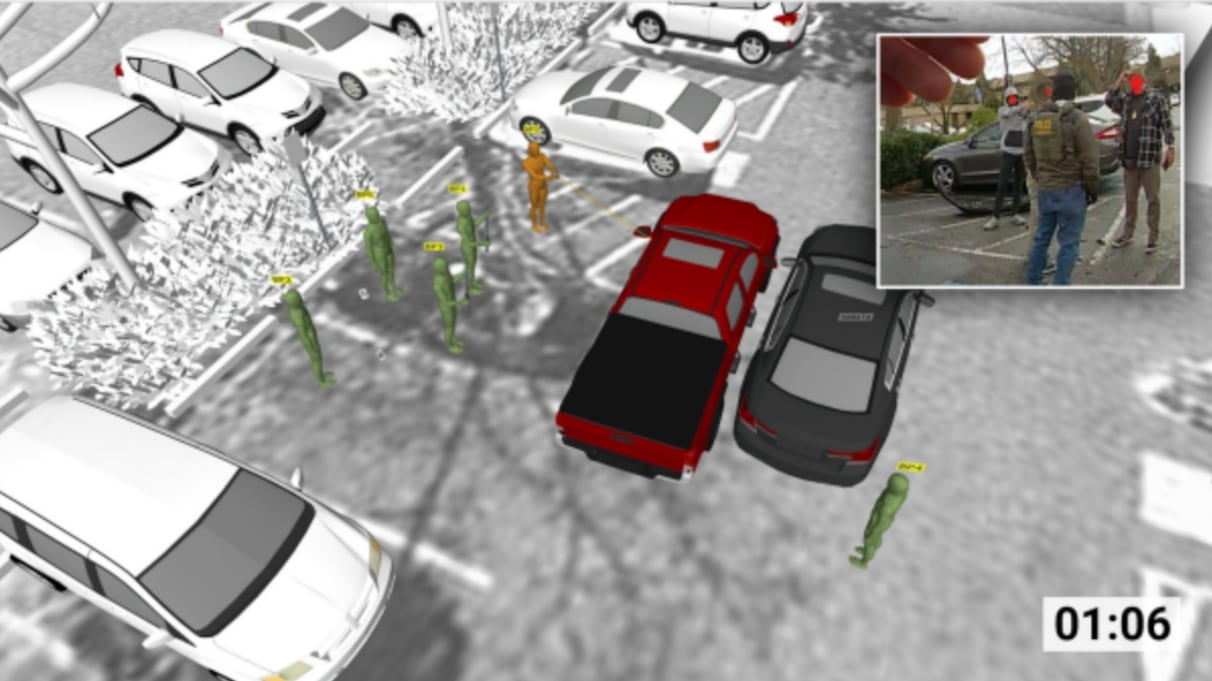
After a U.S. Border Patrol Agent shot two immigrants in East Portland this past January, federal officials said he had good reason: He feared for his life because he was in the “direct path” of the immigrants’ truck, and he believed the driver was trying to kill him.
A forensic consulting firm that analyzed the incident has come to a different conclusion: The vehicle was not headed toward the agent when the agent fired his shots.
“When the shots were fired into the side of the Toyota, the shooter was not in a position to have been run into or over by the Toyota,” said the firm’s report, which was made public in a court filing Friday.
This finding, an attorney for the driver noted, was consistent with other evidence, such as the position of broken glass at the scene from the side window of the truck. The report was submitted to the federal public defender’s office, which represented the truck’s driver, a Venezuelan man named Luis Niño-Moncada.
But in its own court filing, the federal government disputed this account, pointing out that the incident in question happened within seconds, a period in which Niño-Moncada had dramatically rammed the truck against federal agents’ empty vehicle multiple times and put multiple agents at risk of physical harm.
“By the time the shots were fired,” the feds said, the truck “had violently reversed, lurched forward, and then reversed again, striking the Sonata”—all within close proximity to the Border Patrol officers, and specifically the officer who fired the shots.
The briefs were submitted as part of sentencing recommendations that ultimately reached the same conclusion as to what should happen to Niño-Moncada. In line with an agreement forged months ago, the parties agreed he should receive credit for the time he has spent in jail since the Jan. 8 incident, and be released at the time of sentencing. (Niño-Moncada acknowledged he is in the U.S. illegally; he may well be deported when he is released.)
The sentencing agreement reflected a notable retreat for federal prosecutors, who had originally accused Niño-Moncada of assaulting a federal officer with a deadly weapon—a crime that could result in a long prison sentence.
Yet as proceedings appeared to be coming to a close, the dual court filings Friday reflect an ongoing battle to establish a final narrative of what exactly happened in the high-profile incident.
It took place during one of the most contentious periods of the second Trump administration, one day after a federal agent shot and killed Renee Good in Minneapolis. Rumors and intense emotions flew after the incident near Portland’s Adventist Health Primary Care medical clinic. Almost immediately, federal officials were calling the immigrants in the truck “vicious” criminals, while local leaders found little reason to trust the Trump administration’s account.
The prosecution and defense do agree on key portions of what happened that day. Niño-Moncada was in the driver’s seat of a car in a medical facility’s parking lot when federal immigration agents appeared, boxing him in with their Hyundai Sonata. After a pause, Niño-Moncada abruptly backed into the Sonata multiple times, moving it in a way that allowed him to drive off.
“Mr. Niño-Moncada had no justification for backing his truck into the empty Hyundai at least three times, totaling the vehicle,” wrote his attorney Michael Benson, in the filing Friday. “He accepts responsibility and punishment for that conduct. Mr. Niño-Moncada’s decision was made in a moment of panic and does not reflect a pattern of combative or defiant behavior.”
Still in question, however: the precise circumstances under which a Border Patrol agent shot into the vehicle, hitting both Niño-Moncada and his co-passenger before they drove away and sought medical help.
Within hours, as the news spread around the U.S., Trump administration spokeswoman Tricia McLaughlin alleged the truck had “attempted to run over the law enforcement agents,” and that “fearing for his life and safety, an agent fired a defensive shot.”
The federal filing Friday elaborated on that account. It all happened very fast, federal prosecutors say. As the truck lurched back and forth, they allege, it made contact with an agent’s chest as it reversed, and immediately after, the agent had to move to avoid getting hit. “The truck then went forward,” they wrote, and the agent “found himself in the direct path of the forward moving truck and believed defendant was trying to kill him.”
Around this point, they say, the agent then “unholstered his service weapon and fired two shots at the driver through the driver’s door window.”
Prosecutors added that the timespan here was crucial, and that the consulting firm’s analysis failed to make explicit that these events occurred within three to five seconds. The feds argued that the report in fact “supports that the shooting officer’s reaction in shooting after the Tacoma nearly ran him over was reasonable in the face of such danger occurring within those brief seconds.”
The 56-page forensic report produced by Talbott Associates, a forensic consulting firm in Portland, tells another story.
It does not opine as to what actions would have been “reasonable,” but it does offer key conclusions “based on a reasonable degree of engineering probability.”
It says the truck hit the Hyundai three times during the incident. It says the maneuvers were “consistent with attempts to flee the area.”
It said two shots were indeed fired by a Border Patrol agent. And when this happened, the shooter was not in position to have been run into or over by the truck.
It adds that ”incapacitating the driver would not have caused the vehicle to stop moving.”
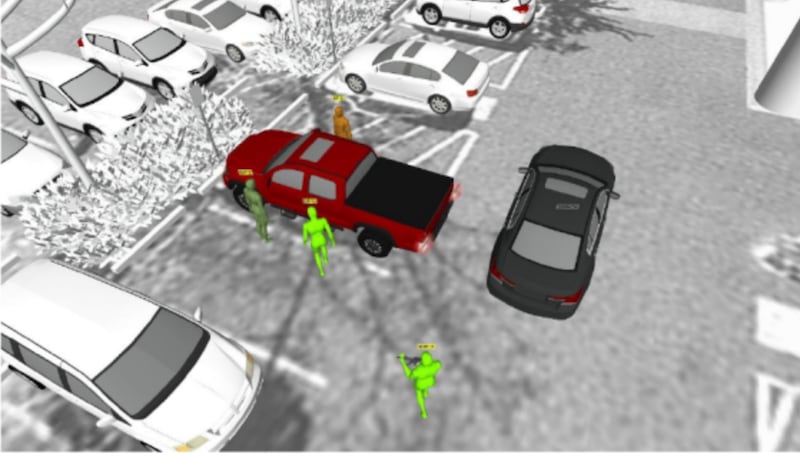
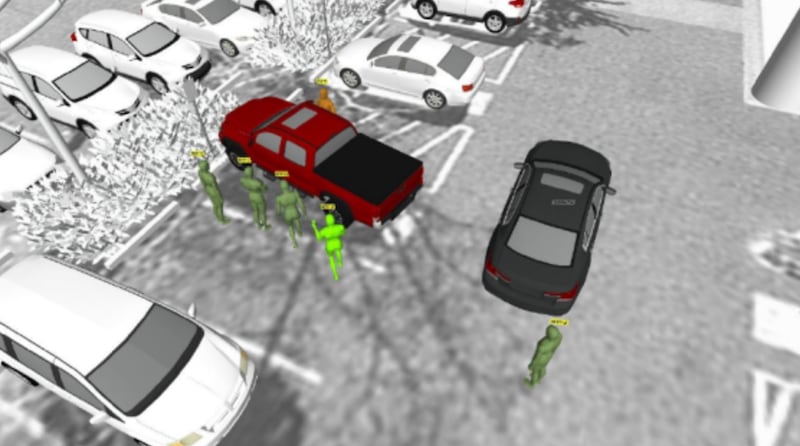
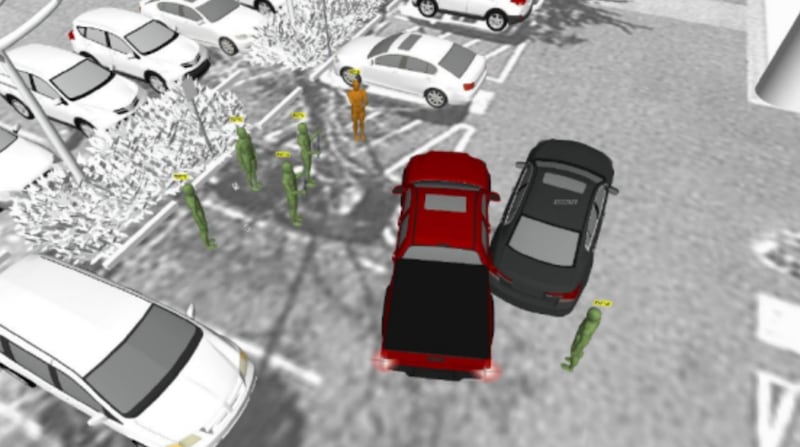
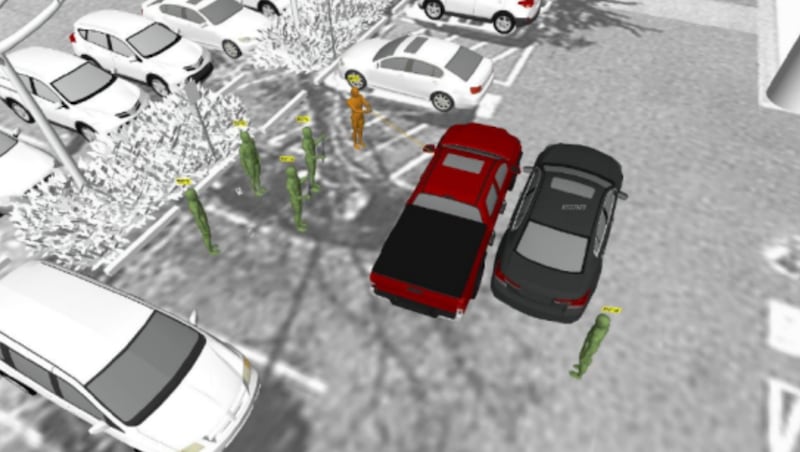
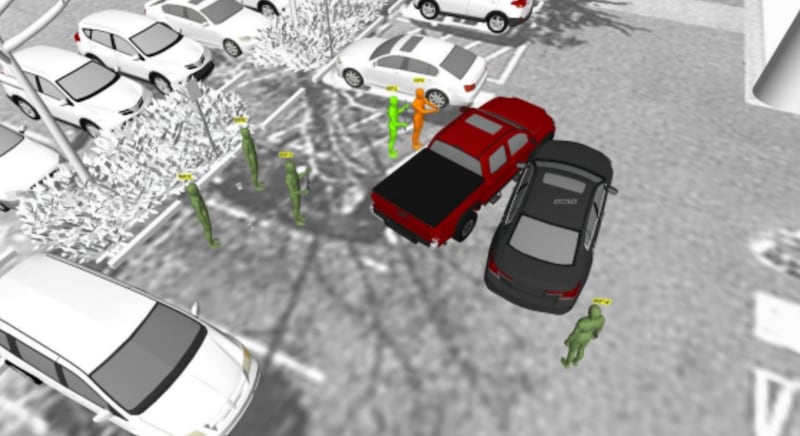
In his account, Niño-Moncada’s attorney writes that the precise order of events would have been closely contested at trial. He says that Niño-Moncada’s position is that the physical evidence and video are most consistent with the following story: The agent shot Niño-Moncada as the agent “moved towards the truck” and while the agent “was not in a position to be hit by the truck; he likely fired to prevent the truck from fleeing rather than in self-defense.”
Objective evidence from the incident is sparse, though nearby security camera footage captured it in part. Benson’s filing also notes footage captured by Portland police officers, who arrived on scene soon after the truck had fled.
Their body-camera footage showed them doing “an excellent job trying to immediately secure the scene and prevent any interference,” Benson wrote, though he describes some unprofessional behavior by federal agents, captured on video. “[Portland Police Bureau] bodycam footage shows a PPB officer preventing a border patrol agent from interfering with the full preservation of physical evidence; the border patrol agent was attempting to remove an unfired rifle round from the scene.”