Skip to main content
A notable report Oregon lawmakers got this week—and which they are set to discuss in Salem next week—sits atop an intriguing claim: With a centralized universal health care system, Oregon could provide more benefits to more people for less money.
This is not, in fact, a new finding. Oregon’s Joint Task Force on Universal Health Care came to the same conclusion in 2022. Before that, a Rand report made some of the same claims. The health care systems of much of the developed world are long-standing proofs of concept.
Even voters have seemed open to the idea for some time now. Seventeen years after the Oregon electorate soundly rejected a ballot measure for universal health care, a 2019 Oregon survey found that 75% of respondents regarded universal health care as desirable, and that a remarkable 62% said they would support a ballot measure to that end, even after it was explained to them that the health care tax to fund it would be two to three times as large as the Oregon income tax but households would pay less than they currently pay in premiums and other out-of-pocket expenses.
It was against this heady backdrop that lawmakers in 2023 commissioned a new entity, a Universal Health Plan Governance Board, to be appointed by the governor and, at last, turn words into deed, designing a comprehensive plan that could Oregon could wield in becoming the first state to radically overhaul its health care system.
With the report’s (delayed) arrival this week, some feel the time is here to hammer this thing through. The board’s report is more cautious, framing the coming months as a period for gathering feedback as it seeks more funding to continue its incomplete efforts. Why these efforts are incomplete is itself a contested question; many lawmakers thought for $1.5 million they were buying a plan they could turn into a bill or a ballot measure, and the 89-page document that arrived Monday is clearly not that.
“This report is not a turnkey mechanism to start a universal health plan,” the board’s executive director, Dr. Mimi McDonell, tells WW, but she says it meaningfully advances policy discussions on key questions around funding and implementation. “What it’s really meant to do is to make much more concrete what a universal health plan would actually look like, especially with respect to the revenue portion.”
McDonell says the report is informed by months of debate and conversation—with consultants, academics, analysts—and that it gives members of the public the opportunity to see what a plan of this magnitude would mean for them.
And yet…even as support for a massive health care system overhaul seems to be swelling, the Oregon plan arrives to notably tepid enthusiasm from the powers that be. Gov. Tina Kotek has distanced herself from the board she appointed. House Health Committee chair Rob Nosse (D-Portland), the kind of guy who starts off interviews by reflecting that single payer is “the way,” says he has not seen evidence, at least so far, that advocates itching to make their move in the coming legislative session are politically prepared for the bruising ballot measure campaign that would likely follow.
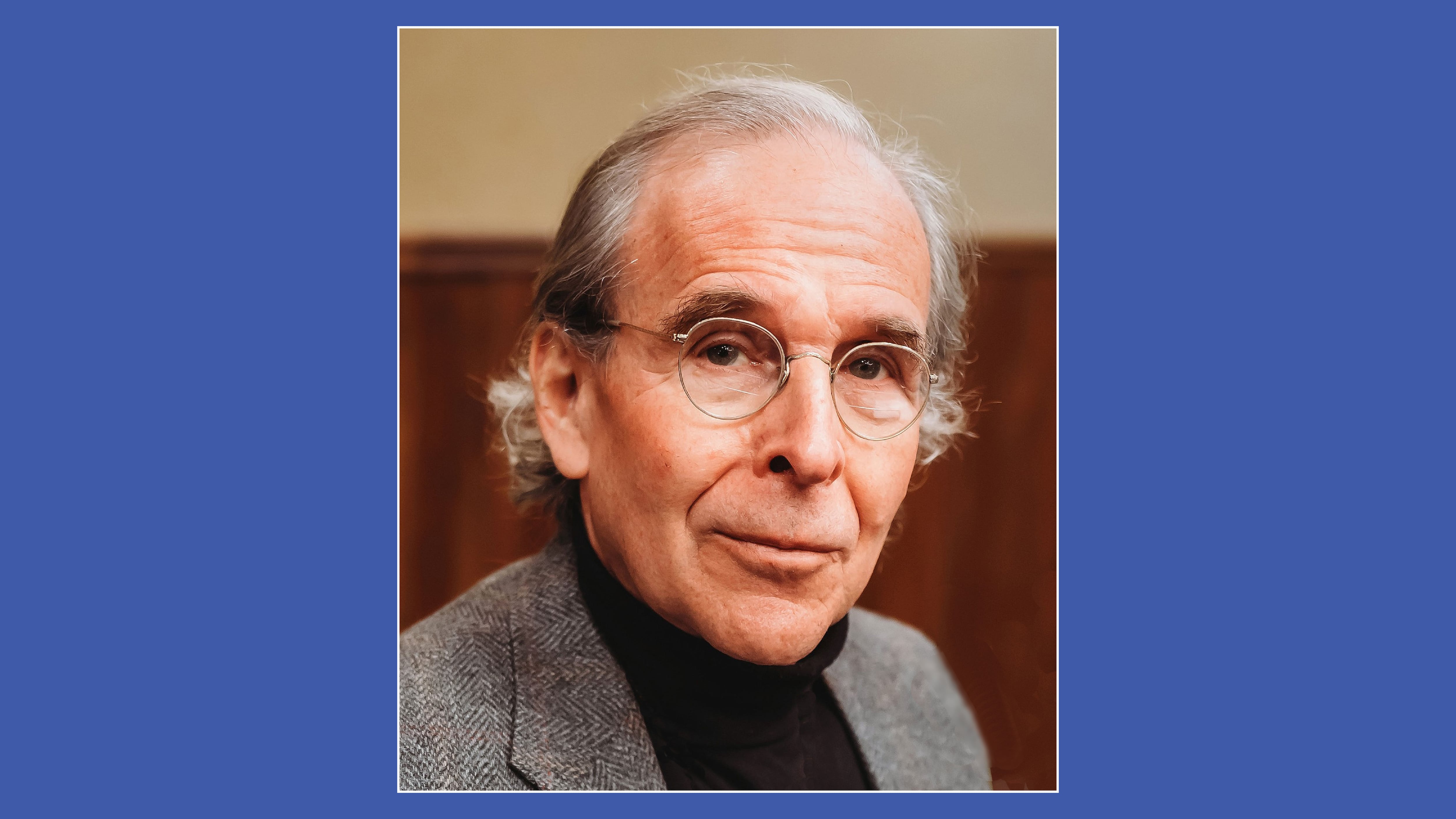
Meanwhile, some see the report as a painful missed opportunity. Dr. Samuel Metz, a longtime single-payer activist who served on the joint task force, one of the prior groups to study the matter, is very unhappy with how things have played out thus far.
Metz, around 2009, became an early member of the Portland chapter of Physicians for a National Health Program, and in retirement from medical practice he serves as a vice president of what has since become a statewide chapter of the group (the presidency is currently vacant.)
Over a drink last month at McMenamins Hillsdale Brewery & Public House, he acknowledged that his version of the story is now “colored by fury and disappointment.” In follow-up conversations by phone after the report dropped Monday, he reflected on the unsettled politics of the matter, and where we might go from here.
WW: Some say this report is, in fact, a single-payer plan. You disagree. Why?
Samuel Metz: A single-payer plan means that providers are paid from a single source. That is why it’s called single payer. If a provider has to deal with multiple payers—that is, employer-sponsored insurance that’s in an [Employee Retirement Income Security Act] plan and Medicare and commercial insurance and a public option—that’s not a single-payer plan.
It might be universal if everyone is covered by some insurance policy. But if there are multiple insurance policies, you do not have a single-payer plan.
More importantly, if you don’t have a single-payer pay plan, you do not enjoy the cost efficiencies of the single-payer plan. And your non-single-payer plan may be just as expensive and inefficient as the plan you hope to replace.
Given that the board was supposed to create a single-payer plan, what caused it not to do that, in your view?
The bill that created the board was vague at best and self-contradictory at worst. The bill was written without the direct input of single-payer advocates in Oregon.
The governor’s signing letter—I recommended she veto it—said this bill is vague, it’s desperately underfunded. It could just duplicate efforts we’ve already done, and I need legislative guidance. And then she signed it. I hated her for that.
Why?
Because she gave good reasons for not turning this governance board loose without a specific set of goals and deliverables. My fear was this governance board would fumble around, do nothing of value, and embarrass the single-payer movement.
What do you think this board should have been assigned to do, and how does that contrast with what it has actually done?
I wanted to design a single-payer health care plan for Oregon. That is: a single risk pool that includes everyone, a single benefit plan that covers every treatable disease, a single network which would allow any licensed provider to get paid for taking care of any Oregonian that would free providers from the complexity of trying to collect from multiple insurance companies with multiple plans.
I’m confused. Those do seem to be the parameters of the plan it describes.
These are the properties that the governance board wants to see in a universal care plan. But they don’t specify the benefits. They don’t specify a payment system. They don’t specify a billing system.
And in fact, the report doesn’t say this is a single-payer plan.
What this proposal does is say: We can’t do a single-payer plan in any state because we need waivers that we don’t have yet. So, we’re going to create a public option. They don’t call it a public option, but it’s a tax-funded insurance plan that will run until such time as we’re able to fold in all the federal money that we can’t touch right now.
But because it isn’t a single-payer plan and providers still need to deal with multiple insurance plans, with multiple schedules, including this one, there won’t be any administrative savings.
It isn’t that they failed to design a single-payer plan—though that is bad. What’s even worse is they proposed a plan that will fail. It’s a plan that depends upon administrative savings that aren’t there.
The executive director of the board pushes back on this. She notes, for example, that the report does discuss benefits. And says the plan in its final, best state would appear to providers like a unified payment system.
A provider under this plan will still need to deal with multiple private and public insurance insurers.
And the benefits.
There’s aspirations. It said, it would really be nice if there were something like the Public Employee Benefit Board plan. It would really be nice if we covered, generically, mental health. But I can’t say, “I’ve got a diagnosis code. Is this covered? And how much will the provider be paid to cover it?”
That’s what a plan is.
A fellow member of the Senate Bill 770 task force and a former member of the governance board, Warren George, uses the expression “They’ve buttered a rock and called it a biscuit.”
What do you think should happen now?
If I had a magic wand, the board would say: “We failed to fulfill the charge. This task is far more complex than we imagined. We recommend that the Legislature create a paid board or commission a consultant to design a single-payer plan for Oregon.”
The federal government is a straitjacket on state-based health care reform. It severely restricts what states can do with money that comes from the federal government. Every state has reached the limits of what it can do with the straitjacket on.
At some point, the federal government is going to come around, make a superwaiver available. The Oregon Legislature is going to say: “At long last we can take the step that all the single-payer advocates have been trying to get us to do. We’ve got the waiver. Now, let’s go to the shelf and pull down our single-payer plan.”
Except there’s nothing on the shelf. When the waivers come, we’re starting from ground zero.
Given the high interest in single payer at the federal level, why not wait for the feds to do it and establish a national system?
Waiting for a federal national Medicare for All plan has been the same strategy since Medicare was enacted. It hasn’t happened. By simultaneously pursuing both a national plan and state-based health care, we increase the chances that Oregon will see a single-payer plan.
What do you think is the most likely political outcome from this report?
I don’t know.
Even as we talk about this, Oregon is doing all these other health policy things, like a new Obamacare health care exchange. We’re going multiple directions at once, and it’s not clear there’s any single vision driving any of this. What do you think about that?
There are two kinds of health care reform that should not be confused. One is: “We have a system that doesn’t work. It can’t be repaired. We need to replace it.” That’s the single-payer effort I’m involved in.
The second kind of reform is: “There are people dying now because they aren’t getting health care. We can’t wait five years for Sam to bring the glory of single payer to the U.S. We need help now.” And to help these people, we need to shift costs. We need to move money around.
We need to do that because we’re human and we need to take care of these people. We can’t pretend that these efforts are improving the health care system.
Both need to be going on. And working on one is not the same as working on the other.