Skip to main content
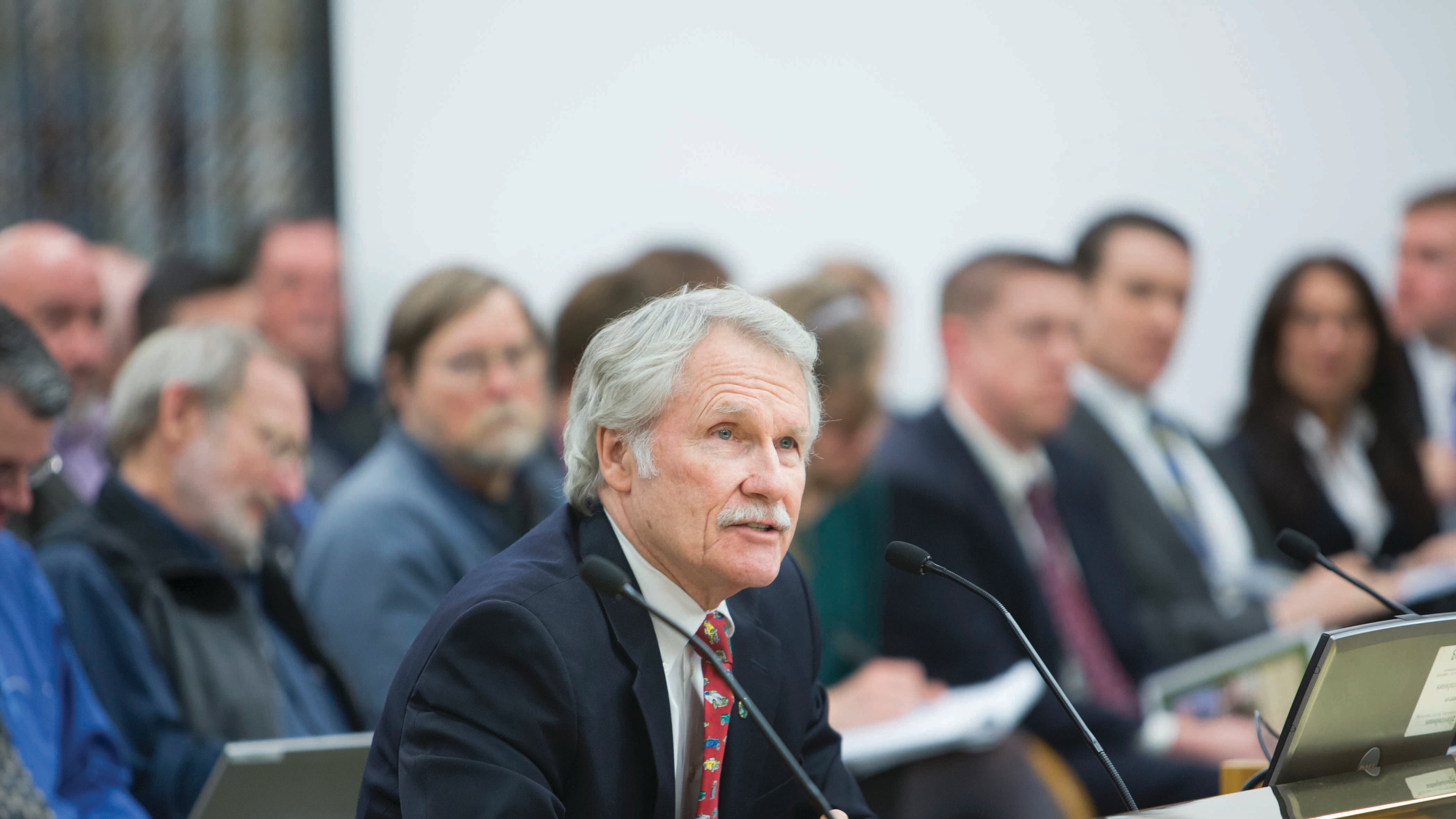
John Kitzhaber, one of the most prominent Democrats in Oregon history, was elected governor four times on the party ticket before resigning amid an influence-peddling scandal in February 2015. But he has, in time, come to feel the party is an obstacle to structural change that Oregon needs.
“I believe in progressive values,” he says. “The problem is, the structures we cling to are getting in the way of delivering on those values.”
Kitzhaber’s distancing from the Democrats is not entirely new; he formally changed his voter registration to nonaffiliated on Dec. 9, 2021, according to Washington County voter registration records, a development first reported by Oregon Public Broadcasting in September. In an interview this week with WW, he discussed why.
Some of his frustrations stem from long-standing issues, such as the fact that Democrats don’t have open primaries, preventing much of the state from having a meaningful say in which candidates will represent them (“I do think that I think you have a different set of candidates in Oregon and nationally if you had open primaries”).
Other concerns reflect a growing frustration with how Democrats manage some of the state’s most consequential and expensive programs.
“I think a lot of the problems we’ve got today are based on old structures that were put in place decades ago—some of them in the middle of the last century,” he said, citing health care and K–12 and higher education as examples.
“We keep spending money on programs that aren’t producing really good results.” In his view, these huge programs have constituencies around them that resist change. “And those are groups that elect Democrats.”
Kitzhaber is widely credited as a founder of the Oregon Health Plan. Earlier this year he put together a workgroup to study how to manage spiraling costs in the health care system. But he is clearly displeased with how health care policy in Oregon has moved in the past decade.
The frustration spans multiple fronts. There was, he said, a fundamental change in the philosophy of Oregon Health Authority under recent directors Pat Allen and Sejal Hathi, as the agency moved from a collaborator in innovation to a straight regulator.
Meanwhile, he thinks the Oregon Health Plan, the state’s Medicaid program, has bloated and veered from its mission. The benefits and population it serves expanded well beyond what it was designed for, he says. And he says the state has drifted away from the global budget model for the coordinated care organizations that run the program—undermining a key structure that was supposed to keep program costs under control.
Kitzhaber feels state leaders have not adequately prepared to address these key issues. “I don’t think they’ve had any kind of a conversation about revisiting the fundamental CCO model that we put in place in 2012,” he says. “Do we still believe in it? Does it need to be updated? Is it working like it’s supposed to work? What have we learned in the last 10-15 years that can help us?”
He acknowledges Gov. Tina Kotek made a Medicaid advisory group to look at OHP costs, but this was focused on how to cut $400 million from the program in the next budget cycle to address shortfalls caused by the One Big Beautiful Bill Act—the major 2025 law that sucked federal funds from Medicaid nationwide—rather than creating a sustainable program for the long haul.
“I think the executive branch should have been much more engaged in this for the last 18 months, but they weren’t,” he said. “Ultimately the legislature is going to have to provide the leadership to redesign the model.”